Pool Party: Physics-driven local party sports on PlayStation 5
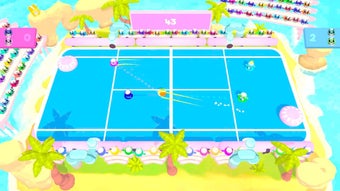
Pool Party, from Lakeview Games, is a physics-based party sports title for PlayStation 5 that casts players as billiard balls in short competitive matches. The game converts billiard movement into playful versions of tennis, football, sumo and more, with over seven modes, customizable ball characters, and AI opponents for practice. It targets families and friend groups who want accessible, pick-up-and-play rounds suitable for mixed-age gatherings.
A physics-first party sports design that makes matches feel chaotic and consequential
The game sets player choices inside a resort arena so collisions matter: because you control billiard balls and the movement is physics-driven, positioning and timing shape each encounter. So, reflexes and spatial awareness reward success more than precise inputs. Thus, clashes produce unpredictable outcomes that keep short rounds lively, delivering emergent moments where a single momentum swing decides a match.
Local multiplayer and varied modes favor quick, social sessions
The experience centers on shared-screen, couch play with support for up to four players, and includes AI bots for filling parties or solo practice. Modes span competitive tests rather than long solo campaigns, including:
- Pool and Tennis
- Sumo and Football
- Idol and other party variants
Because there is no online multiplayer, the design assumes groups in the same room rather than remote matchmaking.
Bright presentation and simple input keep the focus on collisions
The setting is a vibrant resort environment that frames rounds in a family-friendly way, and the control scheme is deliberately approachable so younger players can join quickly. The game requires a standard controller for local play, which keeps setup minimal. Visual clarity favors readable arenas and colorful ball designs over simulation-grade detail, matching the title's lighthearted intent.
Easy onboarding with replay tied to local groups rather than solo depth
Controls are easy to pick up and AI opponents allow practice, making the game accessible for new players and casual sessions. However, user reception notes that content can feel limited for solo players, so long-term engagement depends on having regular local opponents. Thus, replay value is strongest in social contexts where quick matches repeat naturally.
A strong pick for couch parties, less so for solo longevity
The game is a lively choice for groups who enjoy fast, unpredictable matches and social competition; solo players seeking extended single-player progression may find the available content short. For family game nights and friend gatherings the design delivers compact, high-energy rounds that reward quick thinking; those wanting long solo campaigns should consider whether a local-focused title matches their priorities.